
Hey 👋 Today’s newsletter is a bit different from other editions, as I dive into a day-to-day problem I experience while discovering and reading newsletters.
Something interesting is happening quietly all around us.
Our own personal problems we used to shelve, the ones we knew were real but assumed we would need a team, a budget, a six month roadmap, can suddenly solvable by one person on a weekend, thanks to AI.
Not because the problems got smaller. Because the tools got dramatically more capable.
For most of my working life, I had frustrations I just lived with. Small inefficiencies. Broken workflows. Things that were annoying enough to notice but not annoying enough to hire someone to fix.
The gap between having a problem and having a solution used to require resources most individuals simply did not have. You needed engineers. Designers. Time. Money. A company structure around the idea before the idea could breathe.
AI has quietly collapsed that gap.
I am not talking about AI as a productivity tool in the way most people discuss it. Not faster emails or better grammar. I mean something more fundamental. The ability to take a problem you understand deeply, because you live inside it every day, and actually build a solution to it without an army of people behind you.
Let us talk about one such problem some of us have: How to Track and Read Newsletters We Love
For years, I have loved newsletters, not just creating one but also reading many.
At this moment, I am subscribed to 60+ newsletters across fintech, big tech and product management. This translates to 3 to 5 new emails everyday.
Every single day, my Gmail inbox fills with ideas I genuinely want to read.
And yet most of them go unread. Most days I live with guilt of not reading enough in my mornings.
Then I figured out that Gmail is a terrible place to read newsletters.
My inbox is noisy. Transactional emails, calendar alerts, OTP codes, shipping updates, random digests, receipts, all competing with long-form essays that deserve proper attention.
Gmail is not a reading space. It is a utility dashboard.
Reading thoughtful content inside Gmail feels like trying to read a Sunday magazine in the middle of a stock exchange.
So as a weekend project, I built a tool called Folio.
Folio connects to your Gmail, automatically detects recurring newsletters in your inbox, and lets you select the ones you want to read into a separate reading space called Folio.
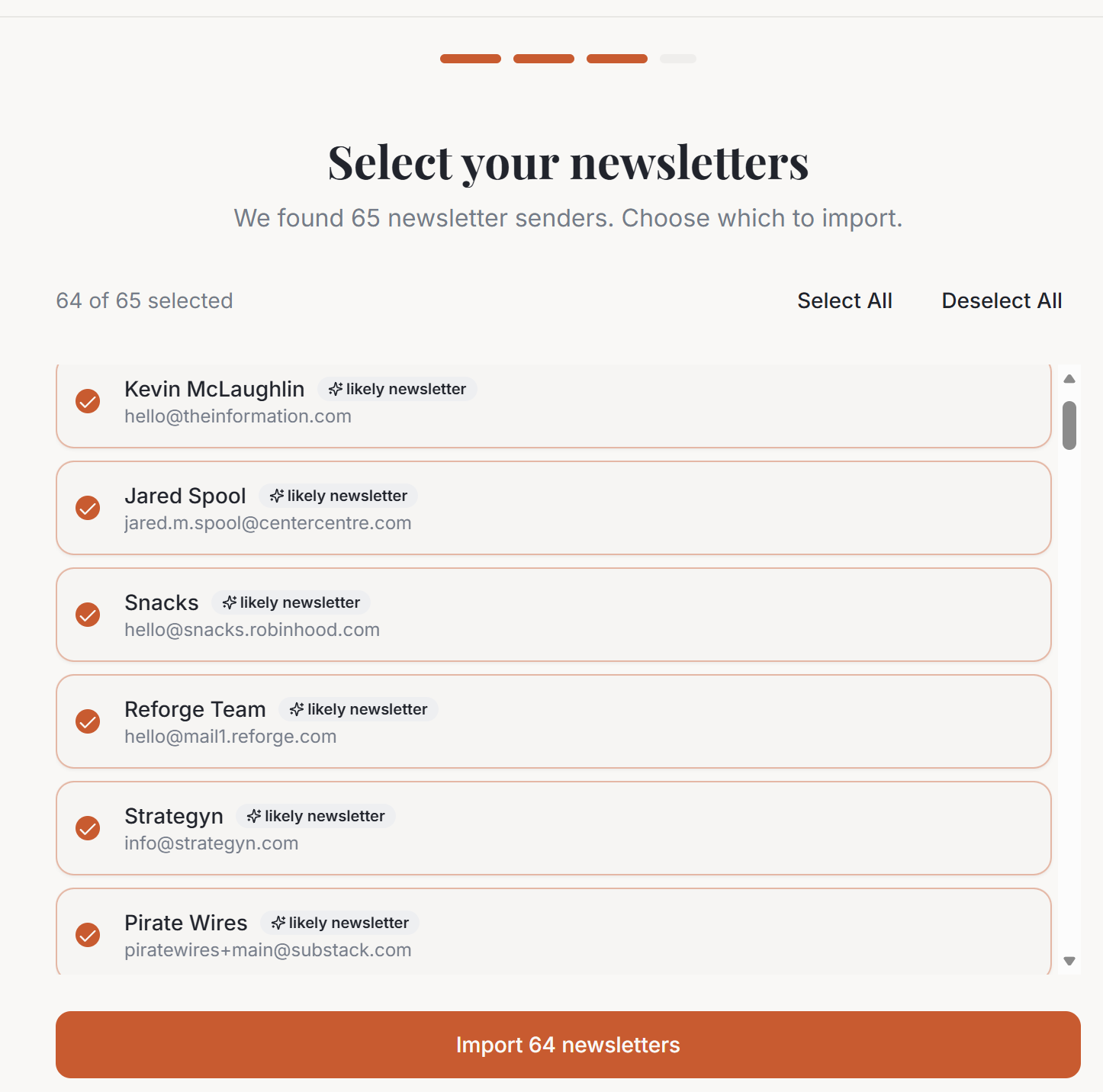
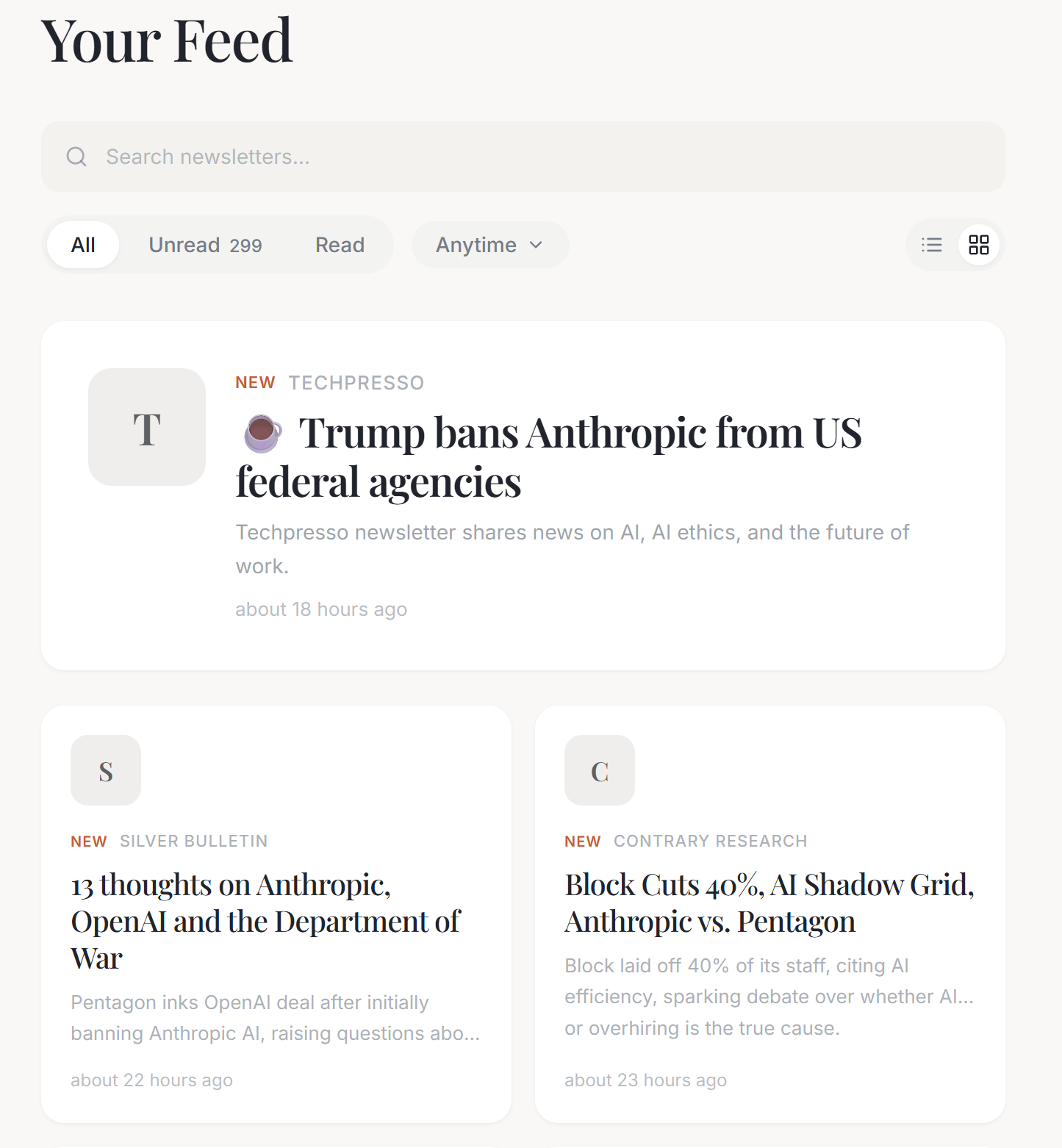
Just the publications you actually care about. Every new issue flows into a clean, focused daily feed. Your Folio Inbox will have no receipts, no promotional clutter and no reply chains.
And here is the part I personally needed most:
Each newsletter opens in a beautiful, magazine-style reading view. Wide margins. Serif typography. Comfortable line height. No distractions.
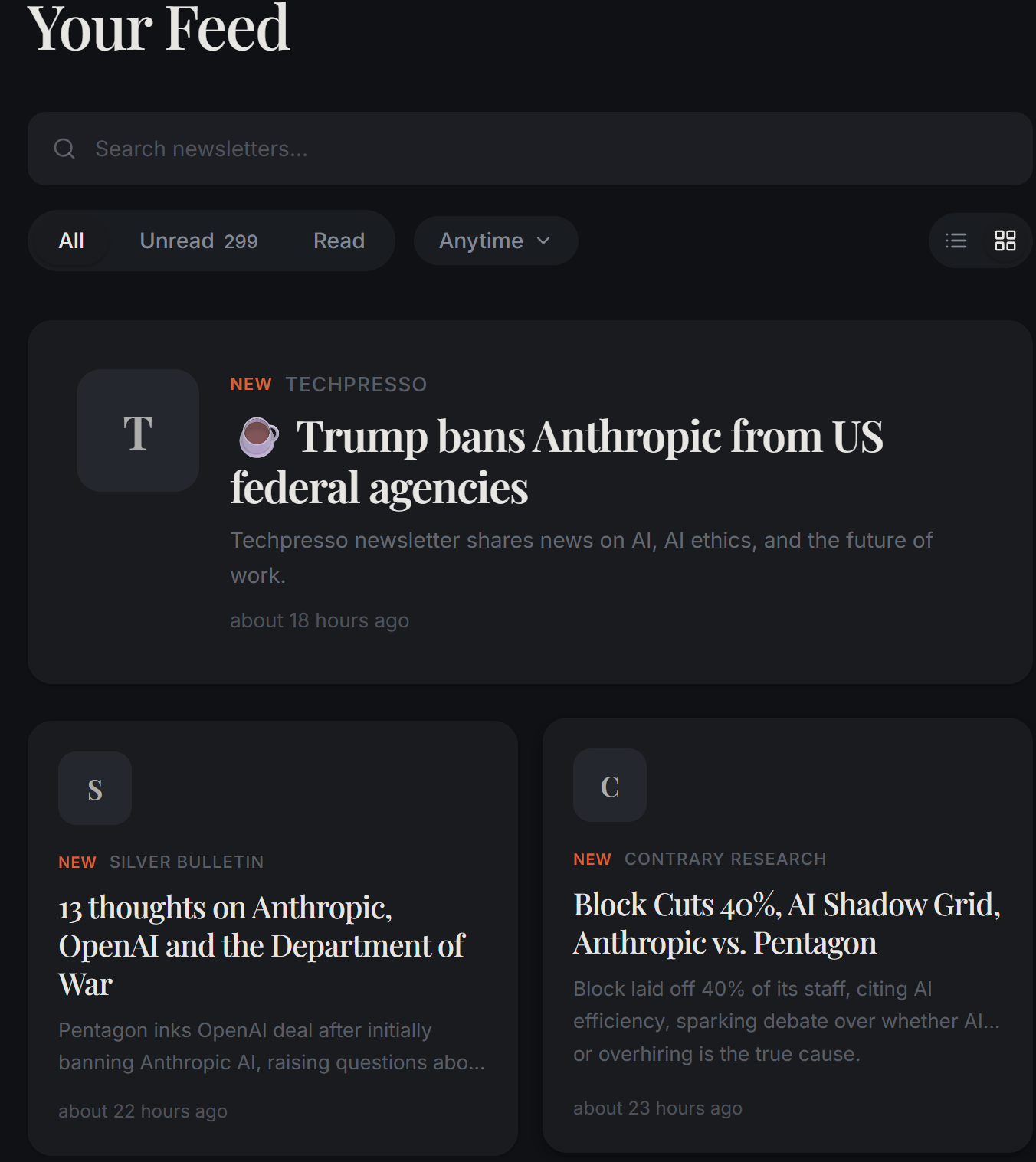
And you can also switch to dark mode:
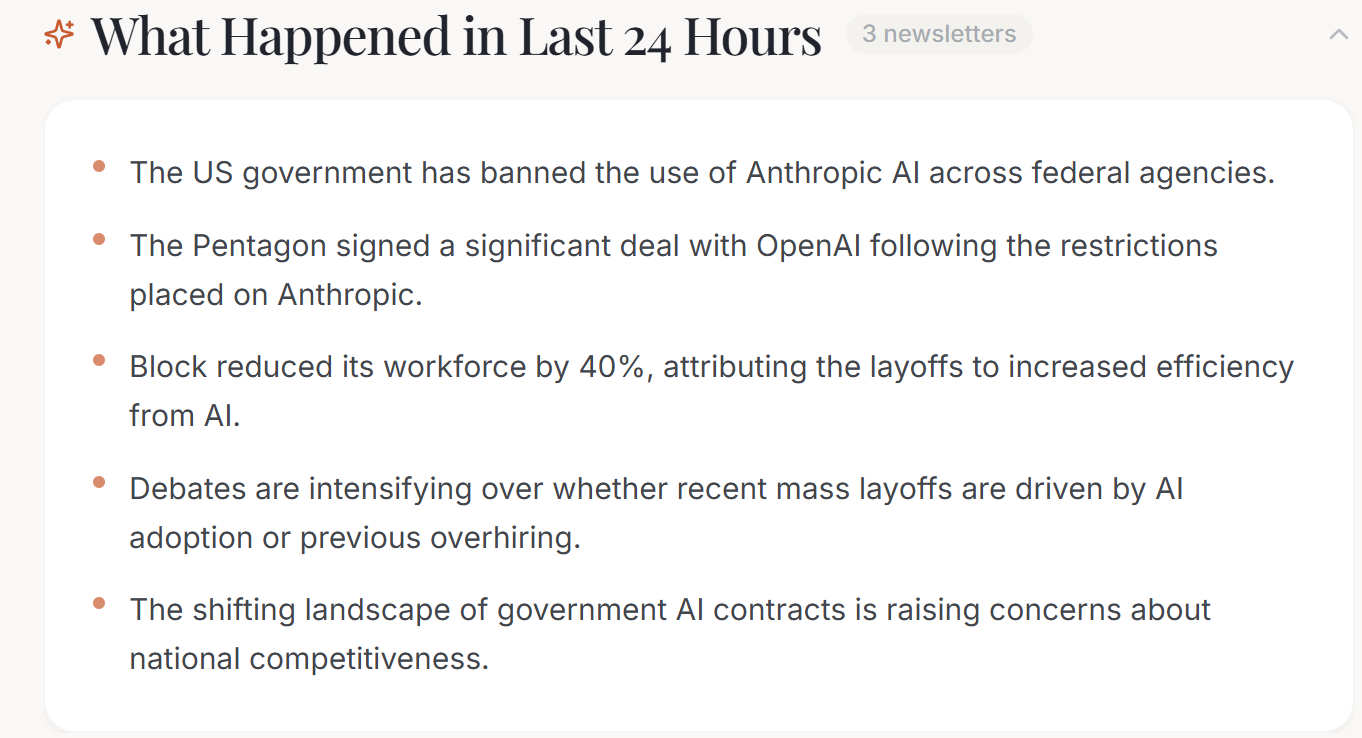
On top of each issue, there is a summary (refreshed everyday) so before committing ten minutes, you get a clear sense of what it is about.
Instead of starting your day asking what do I need to reply to, you start asking what do I want to read today.
I just open Folio on mobile, and get to reading - nothing more nothing less. It does exactly that.
It turns your subscriptions into a calm daily feed. Almost like opening a personal newspaper curated by your past self.
I built Folio because I was frustrated. I was subscribing to brilliant writers but consuming almost none of it properly. Good content, bad environment, zero immersion.
If you have felt the same, overwhelmed inbox, unread long-form pieces, great writing lost in chaos, you might find Folio useful.
While I am refining newsletter detection accuracy, tuning the reading experience, and improving summaries, it is still in testing, open to first 100 test users: