
Every product manager has been there. Six months after launch, your team is frantically refactoring code, redesigning APIs, or worse explaining to stakeholders why that “temporary solution” now requires three quarters to fix.
The culprit? Decisions made without scalability in mind.
Scalability isn’t just about handling more users or processing more transactions. It’s about making choices today that won’t require complete rewrites tomorrow.
It’s the difference between building a product that grows gracefully and one that collapses under its own success.
Explore some beginner guides and courses:
Basics of Product Leadership (Video Course)
The Mental Model Shift
When you’re designing a new capability, the question isn’t “Does this work?” but rather “Will this still work when we have 10x the users, 5 new markets, and 20 integration partners?”
This mental shift requires looking beyond the immediate problem.
Consider how Stripe approaches API design. When they built their payment infrastructure, they didn’t just think about processing credit cards. They thought about a future where payments could come from dozens of sources i.e bank transfers, digital wallets, buy-now-pay-later services, even cryptocurrencies. Their API wasn’t designed for the present; it was architected for the unknown.
The principle here transcends fintech. Whether you’re building a SaaS platform, a marketplace, or a consumer app, the same logic applies: design for variability, not just functionality.
The Extensibility Principle
One of the most powerful concepts in scalable product design is extensibility i.e the ability to add new capabilities without touching existing code or logic. Think of it as building with Lego blocks rather than molding clay. Clay requires reshaping everything when you want to change something; Lego just needs new pieces.
In practice, this means creating clear boundaries between different parts of your product. When you’re adding a new payment method, you shouldn’t need to rewrite your checkout flow. When you’re launching in a new country, your core product logic shouldn’t require modification. This is where abstraction becomes your best friend.
Consider your data models. Are you hardcoding specific values, or are you building flexible schemas that can accommodate new types? If you’re building an e-commerce platform and your database assumes every product has exactly one price, you’re setting yourself up for trouble. What happens when you need to support volume discounts? Regional pricing? Subscription tiers? A scalable approach uses a pricing engine that can handle multiple price types without changing your core product table.
The Power of Defaults and Overrides
Here’s a pattern that separates good products from great ones: intelligent defaults with surgical overrides. This principle applies everywhere, from user interfaces to API design to business logic.
The idea is simple but profound. Your product should work perfectly out of the box for 80% of use cases, with no configuration required. But for the remaining 20%, users should be able to override specific behaviors without rebuilding everything.
Look at how modern APIs handle this. A well-designed endpoint might have a dozen optional parameters, but only one or two required fields. The API makes intelligent assumptions about what most users want, while giving power users the flexibility they need. This isn’t just good developer experience, it’s scalable product thinking.
The same principle applies to user-facing features. Your onboarding flow should guide new users through sensible defaults, but your settings page should offer granular control for those who need it. Your reporting dashboard should display the most relevant metrics by default, but allow users to customize without calling support.
Version Control for Products
Software engineers understand version control intuitively. Product managers often don’t apply the same thinking to product decisions. But versioning isn’t just for code, it’s a critical scalability strategy.
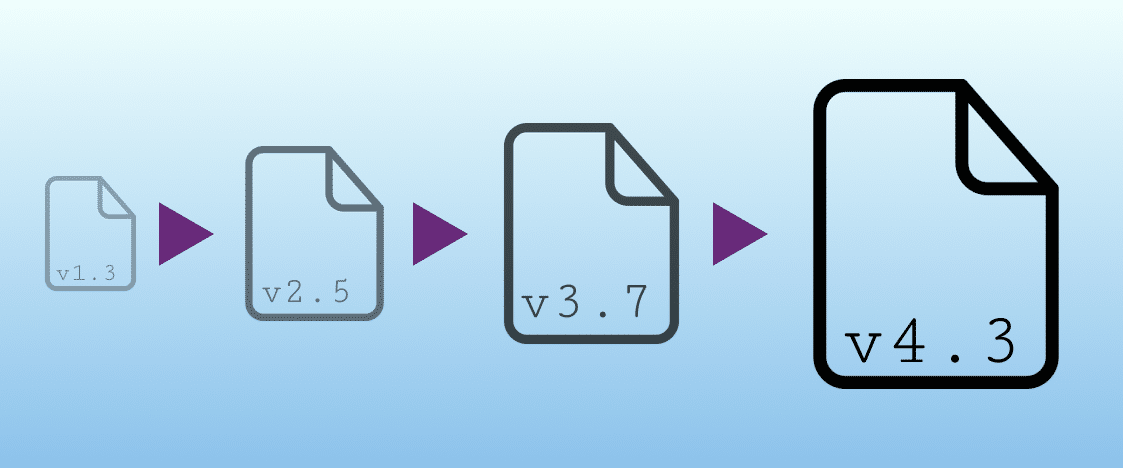
When you launch a new feature or change existing behavior, consider whether you’re creating a breaking change. Will existing users need to adapt? Will integrations stop working? If the answer is yes, you need a versioning strategy.
This might mean maintaining multiple API versions, offering feature flags, or building migration paths. The short-term complexity pays dividends long-term. You can iterate faster when you’re not afraid of breaking existing functionality. Your customers trust you more when changes don’t disrupt their workflows.
The key is planning for change from day one. Don’t wait until you need to make a breaking change to figure out your versioning strategy. Build it into your product architecture from the start.
Composability Over Customization
There’s a common trap in product development: trying to build everything for everyone. A customer asks for a specific feature, so you add a checkbox. Another needs something slightly different, so you add another option. Before long, your settings page looks like a 747 cockpit, and nobody knows which switches to flip.
Scalable products solve this through composability i.e building modular pieces that users can combine in powerful ways, rather than trying to anticipate every possible use case. Instead of building one feature that does ten things poorly, build ten features that do one thing well and can work together.
The Separation of Concerns
One of the most important architectural principles is separation of concerns i.e keeping different aspects of your product independent. When authentication logic is tangled with business logic, which is mixed with presentation code, you’ve created a maintenance nightmare.
This applies beyond code architecture. Think about how you structure teams, make decisions, and plan roadmaps. Are your pricing decisions tightly coupled to specific features? Does launching in a new market require touching every part of your product?
Scalable products separate these concerns. Pricing is a system that can be applied to any feature. Localization is a layer that sits across your entire product. Analytics is instrumented consistently everywhere. When concerns are properly separated, you can evolve each one independently.
Progressive Disclosure in Decision Making
Here’s a framework that applies to everything from UI design to data modeling: progressive disclosure.
Start simple, reveal complexity only when needed.
Many products fail at scale because they try to handle every edge case upfront. Your MVP tries to accommodate enterprise customers, international markets, and complex regulatory requirements all before you’ve validated basic product-market fit.
Instead, design for progressive disclosure. Build the simple path first, then add layers of complexity as you grow.
This doesn’t mean ignoring future needs, it means architecting in a way that allows you to add sophistication incrementally. Think of it as building a house with a foundation that can support multiple stories, even if you’re only building one story initially.
The Documentation Litmus Test
Here’s a simple test for scalability: if you can’t document it clearly, you probably can’t scale it. Documentation forces you to think clearly about how things work, what the boundaries are, and what users need to know.
When you’re designing a new feature or API, write the documentation first. If you find yourself adding endless caveats, special cases, or complex conditionals, that’s a red flag. Scalable products have clear, simple documentation because they’re built on clear, simple principles.
This doesn’t mean your product needs to be simple—it means the mental model should be simple. Users should be able to understand how pieces fit together without memorizing hundreds of special rules.
Scalability is about The Long Game
Building scalable products requires patience and discipline. It’s tempting to take shortcuts, hardcode values, or ship features without thinking about future implications. These decisions feel productive in the moment but create enormous costs later.
The best product managers play the long game. They push back on features that don’t fit the architecture. They invest in foundational work that doesn’t ship visible features. They choose elegance over expedience.
This isn’t about over-engineering or premature optimization. It’s about thoughtful architecture i.e making deliberate choices about which complexities to embrace now to avoid far greater complexity later. It’s about understanding that the decisions you make today will echo through every feature you build for years to come.
Your product is never finished. But with the right principles guiding your decisions, it can grow gracefully, adapt readily, and scale infinitely.